
How a small Spanish city is rethinking urban green infrastructure.
Huesca as a living laboratory for biodiversity, climate adaptation and a new culture of urban nature.
How do you naturalise a city when you don’t have Singapores budget?
Lessons from Huesca, Spain: changing how people see and manage urban nature…
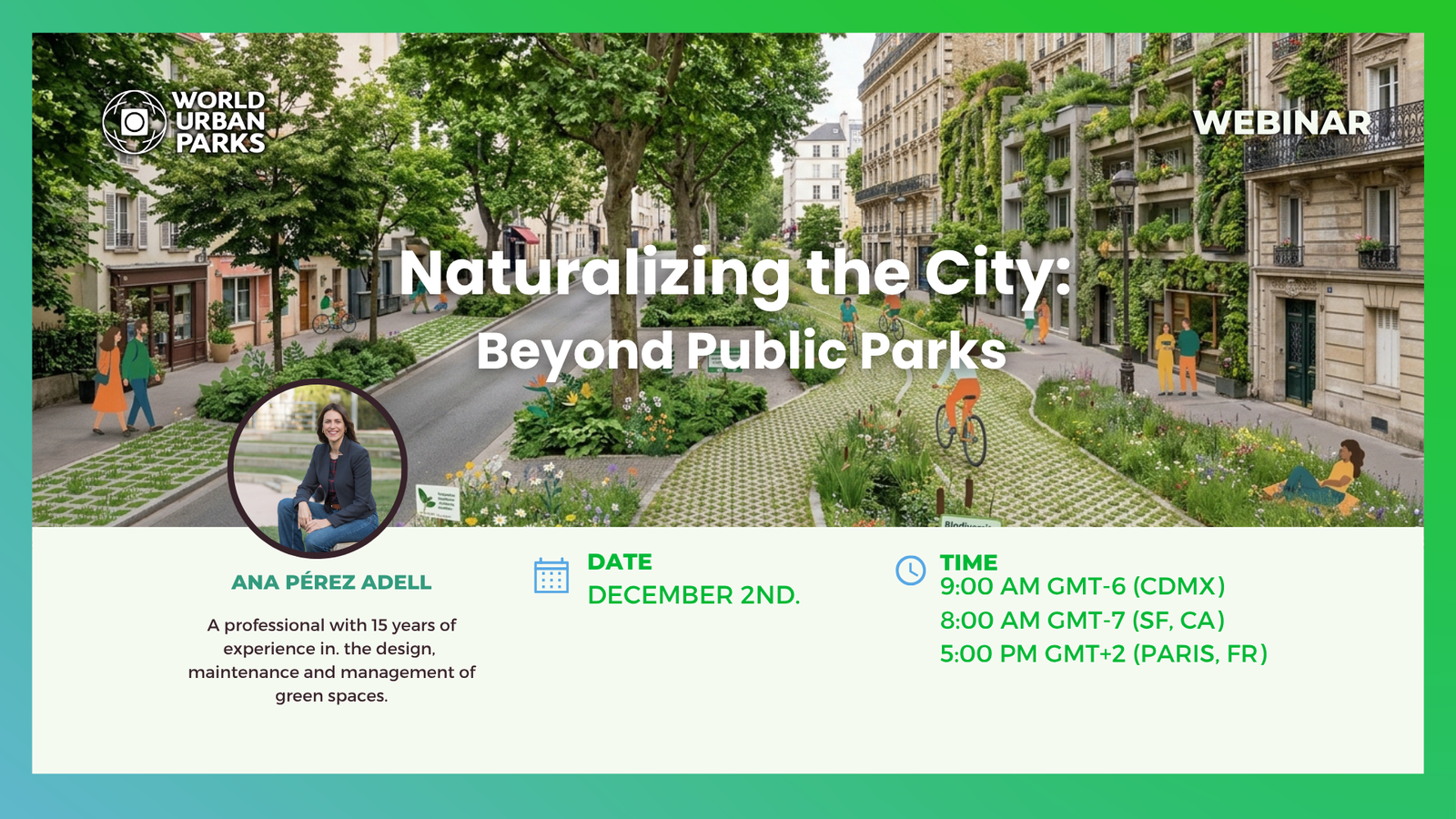
Since 2019, the Huesca City Council has been driving a shift in the management of urban green infrastructure, with initiatives aimed at increasing biodiversity and incorporating ecological criteria into public spaces. Notable practices include the creation of biodiversity islands, the use of “living” tree pits (planted with vegetation), the implementation of permeable paving, and a more natural approach to tree management.
This proposal combines the physical transformation of urban spaces with public awareness-raising and citizen participation. Its core premise is that the “naturalization” of the city must be accompanied by shifts in the knowledge and habits of those who live and work there—including municipal staff.
The intervention employs an ecosystem-based approach to green spaces: fostering biodiversity, changing maintenance practices, and observing the evolution of the naturalized city. We obtain data that guide the future decisions of our adaptive management.

Ana Pérez Adell
Ayuntamiento de Huesca
A professional with 15 years of experience in the design, maintenance, and management of green spaces.
Since 2018, she has served as a Green Infrastructure Specialist for the Huesca City Council. She is also a lecturer for the Master’s program in Historic Gardens and Ecosystem Services of Green Infrastructure at the Polytechnic University of Madrid. She is an active member of the Spanish Association of Public Parks and Gardens, where she led the Plant Health Commission for two years.
As a forestry engineer, she combines a strong technical background with extensive experience in the maintenance of green areas. Her approach integrates functionality, aesthetics, and the optimization of ecosystem services. She is noted for her ability to implement Nature-Based Solutions and promote urban naturalization, developing projects that strike a balance between sustainability and beauty.
Furthermore, her training in digital marketing enables her to design and execute effective communication strategies, fostering public awareness and the social impact of her projects.


